
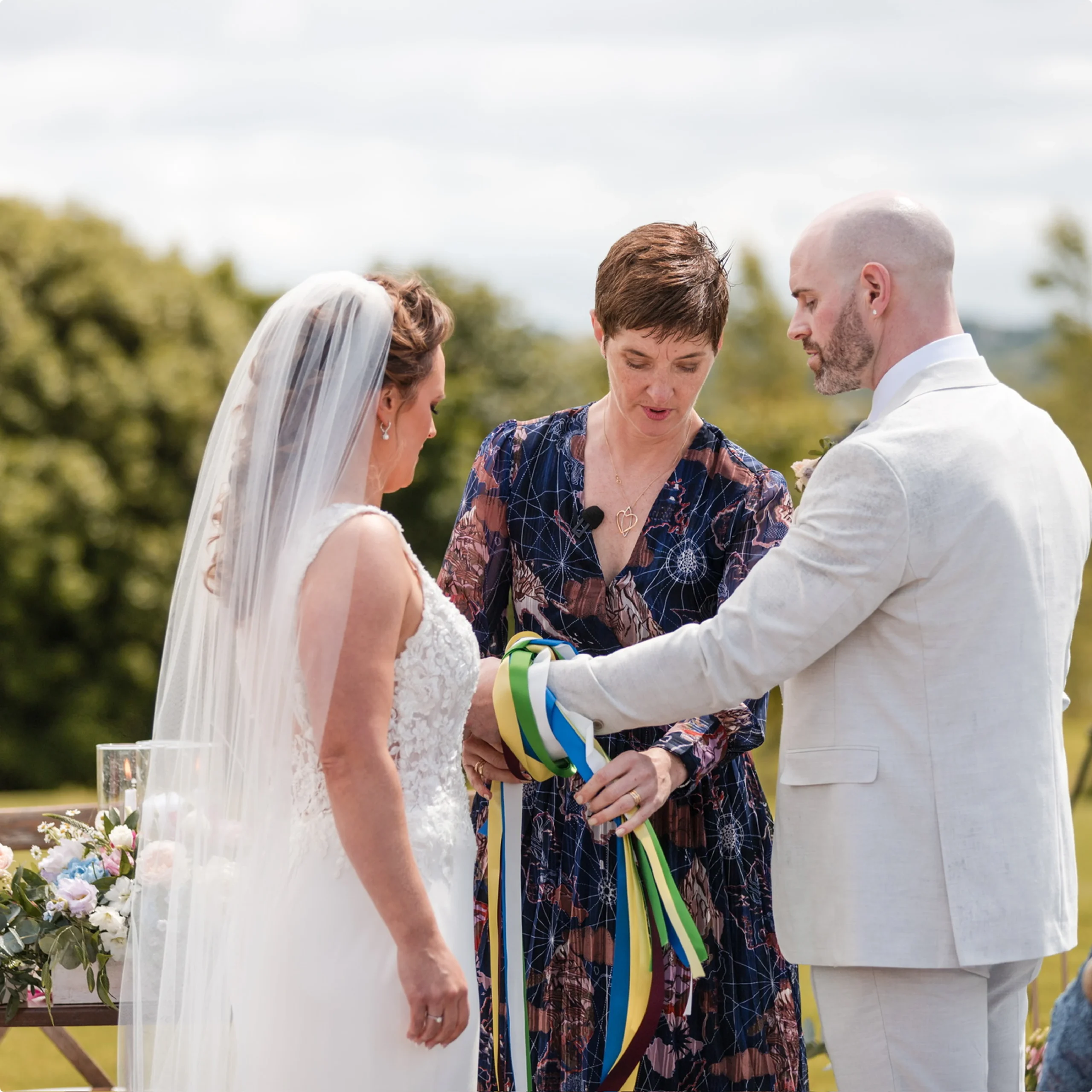
Photo: CJ Nash
22 September 2026
Beach Weddings and Elopements in Wexford: What You Need to Know
Curracloe, Rosslare Strand, tides, wind and what’s legal: everything to know before you plan a beach wedding or elopement in Wexford.
Read more

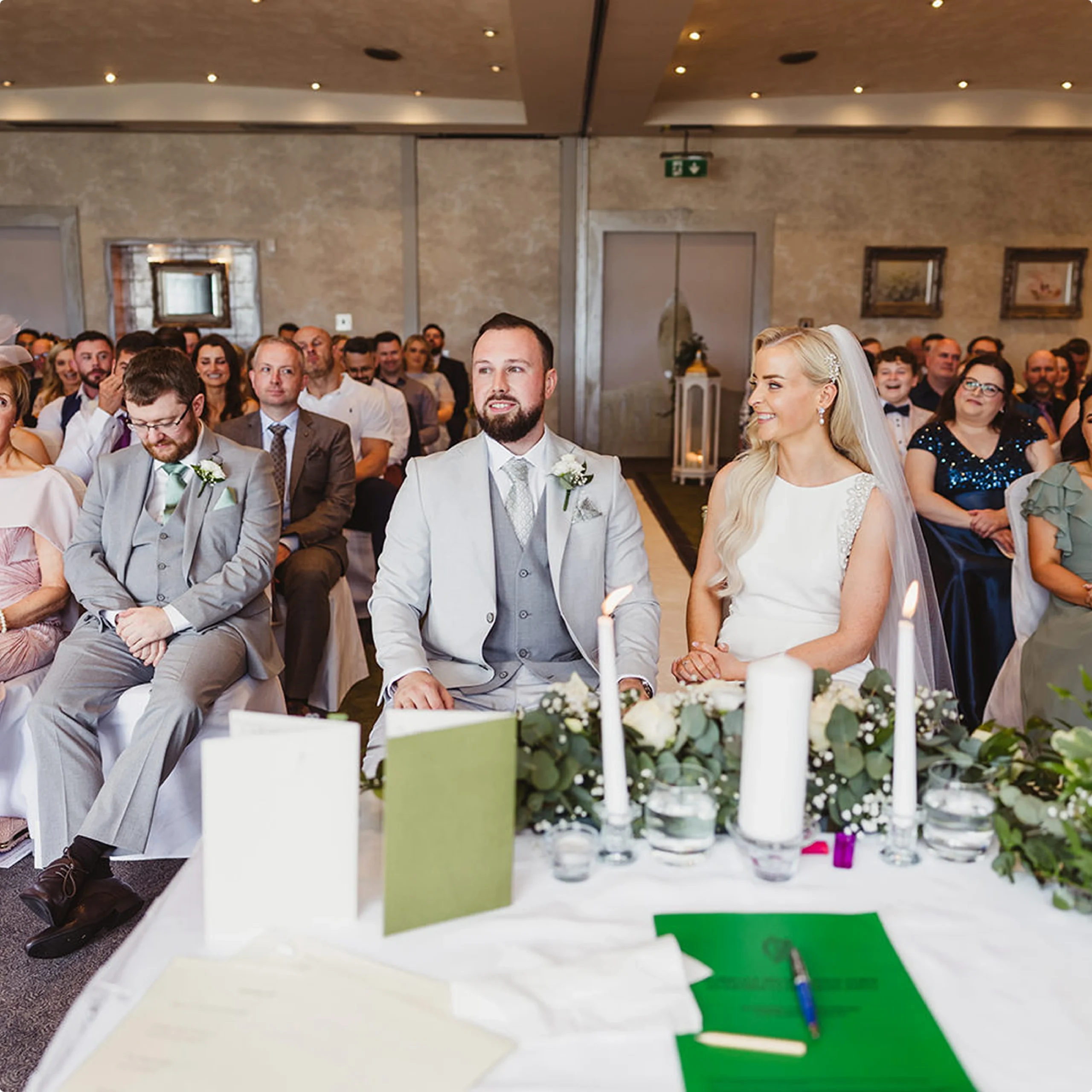
The legal side of getting married in Ireland is simpler than it looks, but the timings matter and there is no way around the three-month notice period. As a registered Solemniser based in Wexford, I guide every couple I work with through the process. Here is how to get legally married in Ireland, step by step.
In Ireland you can marry in a civil ceremony led by a registrar, in a religious ceremony, or in a secular ceremony led by a solemniser from a registered body. Whichever you choose, the notification and registration process is the same.
I’m a registered Solemniser with Entheos Ireland and I’m on the General Register Office Register of Solemnisers, so the ceremony we write together is fully legal. That means a completely personal ceremony, with your own words, readings and rituals, at a venue you love, at any time of day, any day of the week.
You must both give notice of your intention to marry at a Civil Registration Office (the Registry Office) at least three months before your wedding date. You book a marriage notification appointment and attend it together.
You don’t have to use the office closest to your home or to your venue, so if one office is booked up, try another. In my experience, ringing the office is often quicker than booking online.
The notification fee is €200 and it is non-refundable. If the two of you are already in a registered civil partnership with each other, the fee is €50.
Please don’t leave it until the last minute. Appointments can be hard to find at busy times of year, and three months is a legal minimum, not a guideline.
You’ll also need the names and dates of birth of your two witnesses, and details of your solemniser and venue. I’ll give you everything you need about me. Always check the latest list with the HSE Civil Registration Service or Citizens Information before your appointment.
If everything is in order, the registrar gives you a Marriage Registration Form, known as the MRF. It is the document that allows your marriage to go ahead, so please give it to me before the ceremony. If you have to postpone, your MRF stays valid for six months from your original wedding date.
For a legal ceremony in Ireland:
Everything else is yours: the music, the readings, your story and the rituals. A handfasting or ring warming sits alongside the legal words very happily.
At the end of the ceremony, the two of you, your two witnesses and I sign the MRF. You then return it to a registrar within one month so your marriage can be registered. Once it is registered, you can order your marriage certificate.
Couples living abroad can start the process remotely. Contact the Civil Registration Service to arrange your notification by post, send in your forms at least three months before the wedding, and then attend the Registry Office in person at least five days before your wedding day to present your original documents and complete your application. Please build this into your travel plans. You may also need a visa.
If you are an Irish citizen marrying a non-EU citizen, you will be asked to attend an extra interview. These appointments can be difficult to book, so contact the registrar as soon as you start planning.
And if you have already married in your home country, I also work with couples who want to celebrate their marriage in Ireland with a symbolic ceremony. We can plan everything over Google Meet or WhatsApp at a time that suits your time zone.
Every couple I marry gets help with the legal side as part of planning the ceremony, so you won’t be doing this alone. Read more in my FAQs, see how I work with couples, or get in touch for a free, no-obligation chat. If you are marrying in Wexford, my guide to wedding ceremony venues in Wexford may help too.
Rules and fees can change, so always check the latest information with the HSE Civil Registration Service before your appointment. This guide reflects the rules as of September 2026.

Curracloe, Rosslare Strand, tides, wind and what’s legal: everything to know before you plan a beach wedding or elopement in Wexford.

Where to get married in Wexford: the ceremony venues I’ve worked at, from Johnstown Castle to Murphy’s Barn, and what to ask before you book.